Edge-Native Serverless Browser Execution With No Warm-Up Management
V8 isolates eliminate cold starts by running thousands of browser sessions in a single warm process.
Cold starts exist because serverless platforms scale to zero, and scaling to zero means idle environments get reclaimed until a request forces one back into existence. The first request to arrive after that reclamation pays a tax: the platform has to reconstruct the execution environment before the handler ever runs. That reconstruction happens in phases. The platform allocates an instance, downloads the code, boots the runtime, and runs initialization logic, and only after all four steps complete does the actual function execute. Each phase adds its own latency, and the sum is what developers experience as the cold start.
The penalty does not distribute evenly across traffic. Steady, predictable load keeps a healthy share of containers warm, so cold starts touch a small fraction of invocations under normal conditions. The trouble starts when traffic spikes. A burst of concurrent requests arriving faster than the warm pool can absorb them forces the platform to spin up many new containers simultaneously. A disproportionate share of requests hit the full cold-start penalty at once, at the exact moment when reliability matters most to whoever is waiting on the other end.
Teams have built an entire mitigation ladder in response: pruning deployment bundles so there is less to download, raising allocated memory because some platforms boot faster with more of it, paying for provisioned concurrency to keep a baseline of containers warm, or scheduling keep-warm pings to trick the platform into never fully idling a function. Each rung on that ladder treats a symptom. None of them touch the underlying fact that the container is the unit of tenancy, and a container has to exist, fully booted, before it can do anything. It is what the container model costs by design, every time it reclaims something idle and has to build it back.
V8 Isolates and the Container Model
V8 isolates do not make cold starts faster. They remove the event that causes one. Instead of provisioning a fresh container for each tenant, an isolate architecture runs thousands of isolated execution contexts inside a single long-lived process, all sharing one engine that is already running. There is no runtime to boot when a request comes in, because the runtime never stopped running.
The underlying mechanism is not new or exotic. What happens at request time is context creation, not runtime boot: the engine is already warm, so standing up a new execution context for an incoming request costs under 5 milliseconds and a small amount of memory, rather than the hundreds of milliseconds and full runtime initialization a container requires.
That is a difference in kind, not degree. Isolates are tenanted contexts inside a single process, which multiplexes tenancy at a completely different layer of the stack. This architectural shift is not unique to any single vendor's engineering choice, since the direction itself is architectural.
The isolate model does not come free of constraints, and those constraints are the price of the speed. Edge Runtime and Node.js Runtime are not just two locations where the same code happens to run. The stripped-down surface area is not an unfortunate side effect of the speed gain. An isolate stays lightweight enough to spin up in microseconds precisely because it is not carrying the weight of a filesystem, a native module loader, or a full server runtime underneath it.
The API Gateway as an Ideal Workload for Isolate Architecture
An API gateway's job is narrow and repetitive: authenticate the request, check it against a rate limit, validate its shape, transform it if needed, and route it to the right backend. Every one of those operations is short, measured in single-digit to tens of milliseconds, and none of them need a filesystem, a native module, or sustained CPU-heavy computation. That workload profile maps almost exactly onto what an isolate does well. The gateway layer reads less like a plausible use case for edge isolates and more like the use case the architecture was built around.
The objections that apply to other workloads do not really apply here. Raising the execution-limit objection against a gateway is a category error: the workloads that actually hit those limits were never part of a gateway's job description.
Geography sharpens the advantage further. An edge-native gateway can authenticate, rate-limit, and validate a request within milliseconds of wherever the user physically is, with gateway operations completing in roughly 50 milliseconds for most users worldwide. That number only holds because the isolate running the gateway logic exists at the point of presence nearest the user, not in a single central region waiting for every request on the planet to travel to it.
The vendor lock-in argument also inverts at this layer. The gateway becomes the portable abstraction layer that sits in front of infrastructure choices, instead of another point of coupling that ties an application to one cloud's ecosystem. That raises a natural next question: if isolates handle a stateless, short-lived, well-bounded workload like a gateway this well, what happens when the workload gets heavier and starts carrying state across multiple steps, the way a browser session does?
Headless Browser Execution at the Edge Requires Isolates Specifically
Running headless browsers from one or two centralized Chromium pools is the standard architecture for browser automation today, and at scale it is the wrong default.
Trace what a single scrape or automated test actually does under that architecture. The response has to travel back to the origin, get processed there, and only then make its way back to whatever triggered the request. That is three long hops before anything useful has happened, and each hop adds latency that compounds with every repetition inside a loop.
Shared pools create problems beyond raw latency. On top of all this, the container cold-start tax hits browser workloads especially hard: a multi-second stall before the first browser action fires is an inconvenience for a batch job running overnight, but it is genuinely disruptive for a latency-sensitive agent that cannot simply wait it out.
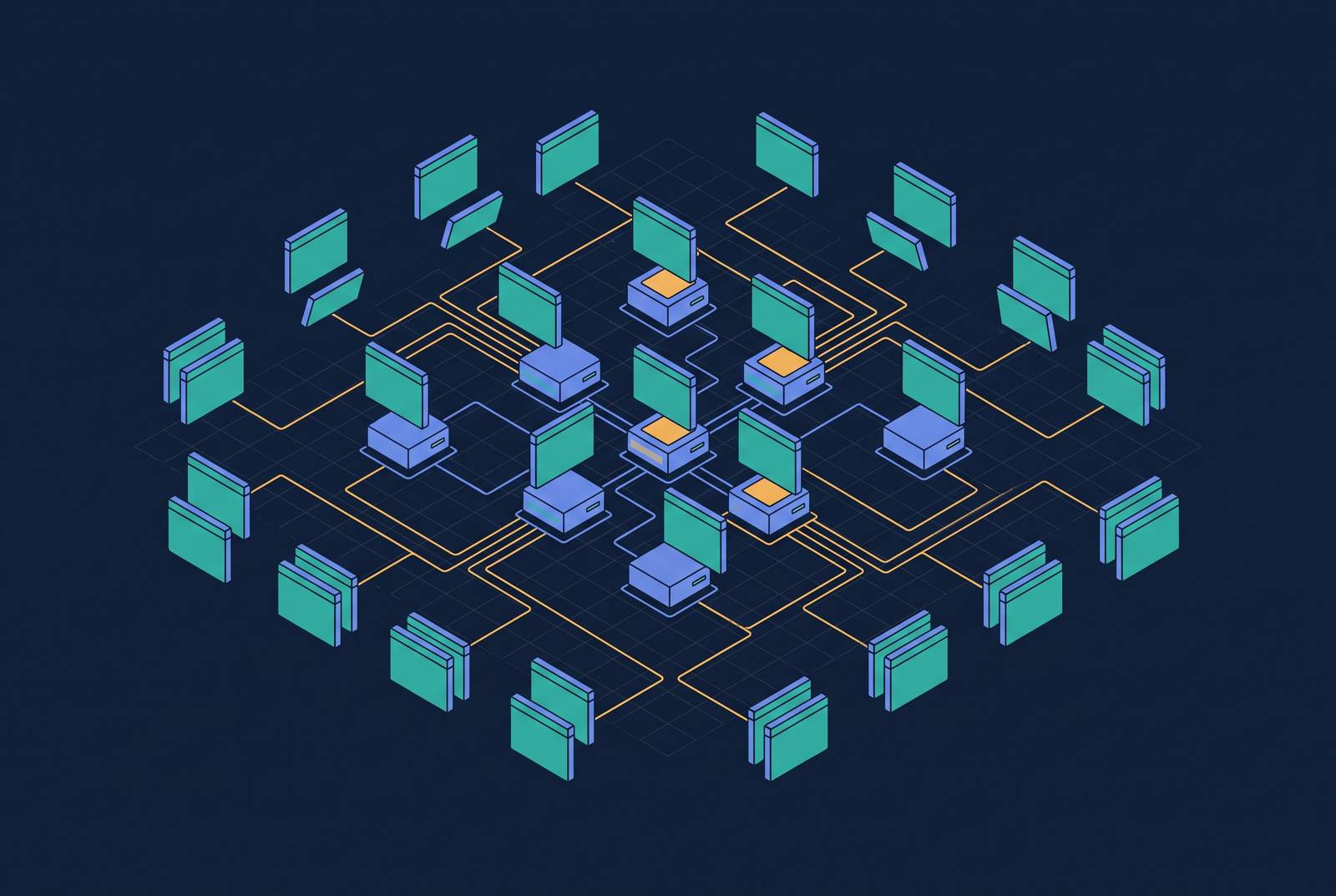
An edge-native alternative puts the browser instance inside the network fabric itself, running at whichever point of presence sits closest to the target resource or to the calling code, rather than at one regional origin trying to serve demand from the whole planet. Anycast routing handles the geographic matching automatically, so no developer has to write region-selection logic into the application by hand. A V8 isolate takes the place of the container for each browser session, using the same sandboxing model that lets a JavaScript engine spin up an isolated execution context far faster than a container can be provisioned. Because each session lives inside its own isolate, a compromised or misbehaving session stays contained to that isolate instead of threatening every other tenant sharing the same pool.
The operational overhead shrinks for reasons built into the architecture, not from extra tooling layered on top. The same logic that made isolates the right fit for a gateway makes them more consequential for browser sessions, precisely because the latency costs, the isolation stakes, and the operational burden are all higher once a container is running an actual browser instead of routing a simple request.
What the billing model looks like when it follows the architecture
The container model's billing habits are not incidental quirks of how cloud providers chose to charge customers. They follow directly from the fact that the container, not the request, is the unit of tenancy. A container has to exist, fully provisioned, whether or not the browser running inside it is doing anything useful at a given moment, and wall-clock session time plus idle capacity charges are what that existence costs.
An isolate architecture produces a different billing model because it is built on a different unit of tenancy. Paying for actual browser work performed, rather than for a warm instance sitting idle between tasks, is the natural accounting of a model where execution contexts exist only for as long as they are handling a request. There is no idle container to charge for, because there is no idle container.
That distinction carries real weight for an AI agent that browses a page, scrapes what it needs, and acts on the result, then repeats that cycle many times over the course of a task. A billing model tied to isolate execution does not, because there is nothing running during the gap that costs anything to keep alive.
This mitigation ladder from the first section quietly undermines itself here. Paying to keep something warm is still paying for idle time.
What edge-native browser execution makes possible for AI agents
The core mismatch between AI agents and the container model is statelessness. A browser session that resets completely on every call works fine for a one-shot scrape: load a page, extract the data, done. A multi-step agent task does not work that way. It needs a session that carries context across steps, remembering what it clicked, what it saw, and what it decided three steps earlier, and the container model, built around short-lived, independent invocations, was never designed to carry that kind of continuity.
An agent that browses, observes, and decides what to do next can only move as fast as its slowest step allows. Inside a loop that fires hundreds of times over the course of one task, as many agent workflows do, that same per-step latency compounds from a minor inconvenience into something closer to a broken execution model, where most of the agent's wall-clock time is spent waiting on network hops.
An isolate-based architecture at the edge resolves both the latency and the statelessness limits of the container model, because each traces back to the same root cause: its assumptions about where execution happens and how long it persists. You can pair durable coordination primitives with that isolate execution to add persistent storage, connection state, and the ability to resume after an interruption, which turns what would otherwise be a stateless function into a long-lived agent session without needing a dedicated server sitting around to host it.
The platform landscape built around this problem, as of July 2026, includes several distinct approaches, each trading off isolation, latency, and operational overhead differently. Browserbase runs as a cloud platform built specifically for production browser automation, accessible through Playwright, Puppeteer, and Selenium, aimed at AI agent builders with a developer-first API and Stagehand integration; its plans range from a free tier supporting 3 concurrent browsers through a Developer tier (25 concurrent, 100 browser hours) and a Startup tier (100 concurrent, 500 browser hours) up to custom Scale tiers, and the company raised a Series B in June 2025. Kernel takes a serverless app platform approach that co-locates agent compute with its browser session to cut round-trip latency, advertising sub-30ms cold starts for sandboxed cloud browsers. Modal offers Sandboxes for running arbitrary untrusted agent code, including Chromium and browser automation, on the same platform it uses for CPU and GPU compute, inference, batch processing, and networking, demonstrated in a production case study with Ramp and advertised as supporting high levels of concurrent Sandboxes.
What unites these approaches, despite their differing emphases, is that the edge-native model removes an operational branch most teams otherwise bury deep in application code: no region-selection logic to write and maintain, no pool capacity to forecast against unpredictable traffic, no Chromium version to track and redeploy on a schedule. The network handles geographic placement. The isolate model handles lifecycle. That division of labor makes the architecture a distinct model in its own right, not merely a faster version of the same container-based automation teams have been running for years.
Where the Edge-Isolate Model Has Genuine Limits
None of this makes the isolate model a universal replacement for every browser or compute workload, and treating it that way would misrepresent what the architecture is actually good at. The same stripped-down runtime that makes isolates fast also defines a class of workloads they cannot handle directly: anything requiring native binaries, very large memory footprints, or long-running CPU-intensive processing that exceeds what a lightweight isolate context can sustain.
Edge Runtime environments provide no filesystem access, no native modules, and a meaningfully smaller subset of the npm ecosystem than a full Node.js runtime supports. A PDF generator that needs a full headless browser instance, more than 500MB of memory, and several seconds of render time to produce a single document is not a workload an edge isolate can absorb. That kind of job belongs on a full Node.js runtime, where the filesystem, the native modules, and the memory headroom all exist to support it.
The honest way to use this architecture is to match the workload to the runtime. Gateways, short-lived browser sessions, agent steps that need low latency and quick context switches: these fit the isolate model closely, for the reasons laid out across this piece. Heavy rendering jobs, workloads dependent on native binaries, or anything that needs to hold a large amount of state in memory for an extended stretch of time still belong on traditional server or container infrastructure, where the constraints that make isolates fast simply do not apply. Recognizing that boundary is what makes the case for isolates where they do fit worth taking seriously.