headless browser APIs built for AI agents: hosted and serverless options compared
Hosted pools keep sessions alive across steps; serverless tears them down after each task.
Ayana Okoro
Section
24 stories in Browser Automation.
Hosted pools keep sessions alive across steps; serverless tears them down after each task.
Three architectural tiers reveal why browser automation platforms are not interchangeable.
AI agents need browsers built for their speed and scale, not human testing workflows.
Rendering environments are where agent-web interactions succeed or fail in production.
New stateless protocols enable MCP servers to run on standard serverless functions.
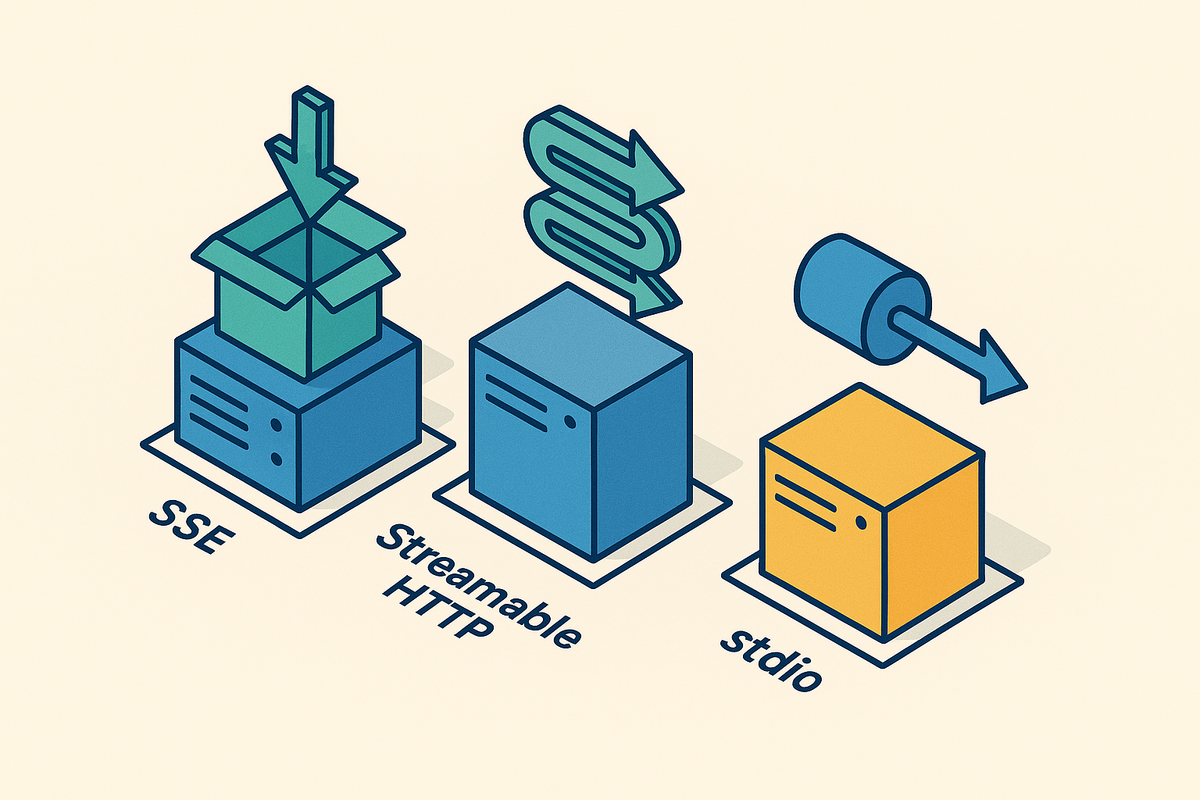
Streamable HTTP replaces SSE as the current standard for network-based MCP server communication.
Web agents need durable checkpoints and idempotent tools to recover from failures.
Rendering speed and completeness matter more than model quality for extracting web data.
Structured APIs replace visual inference for faster, cheaper agent browser interaction.
MCP standardizes agent-to-tool communication, eliminating custom connectors for each integration.
Natural language instructions eliminate fragile selectors and work seamlessly on remote browsers.
Pick the transport model that matches your infrastructure before making downstream decisions.
Beautiful Soup parses static HTML; everything else requires different tools.
Six patterns stack to build reliable autonomous browser agents from tool foundations upward.
Separate your web scraping into three isolated layers to diagnose failures and cut token waste.
Headless browsers let AI agents see what humans see on modern web pages.
Autonomous software that reasons, plans, and acts independently to solve problems end-to-end.
Agents enrich leads, score fit, and personalize outreach without human intervention.
Bounded agents differ from multi-agent systems by design and capability.
Three concurrent tiers structure how organizations actually deploy agentic AI systems.
Understand agentic workflows before choosing a platform to avoid costly mistakes.
AI models find edge cases and permutations human testers skip under deadline pressure.
Playwright's architecture makes it faster, more reliable, and AI-friendly at scale.
Vision and parsing handle extraction; LLMs still struggle when navigation gets complex.