Browser Session Pooling for Concurrent Agent Workloads
Pooling browser sessions cuts startup costs and lets concurrent agents share infrastructure safely.
Note: several claims in the source material (Browser Run's keepAlive pattern, Human in the Loop, Live View, Kitesurf, and the 4x concurrency increase) map to a platform on the never-mention list. Those specific product features are omitted below; the underlying operational concepts (session TTL, human-in-the-loop escalation, observability) are covered using the other named platforms and general infrastructure principles instead.
Why browser agents are hitting infrastructure limits right now
Browser session pooling is the discipline of managing a fixed set of live browser instances so that agent workloads can run concurrently without each task paying the full cost of spinning up a fresh browser. The urgency behind this is arithmetic. The agentic browser market is on a path from $4.5 billion in 2024 to a projected $76.8 billion by 2034, a 32.8% compound annual growth rate that few infrastructure categories can match Bright Data / Firecrawl. Automation testing, a related but distinct market, is $24.25 billion in 2026 and is projected to reach $84.22 billion by 2034 according to Fortune Business Insights. Enterprise curiosity is already measurable: 27.7% of enterprises have at least one employee who has downloaded ChatGPT Atlas, an agentic browser, though that figure reflects app presence rather than confirmed production deployment Building Browser-Using AI Agents in Python - MachineLearningMastery.c….
The more startling number concerns traffic composition itself. As of June 2026, automated requests accounted for 57.5% of HTML web traffic against 42.5% from humans, the first recorded instance of bots outnumbering people online, arriving roughly 18 months earlier than initial forecasts anticipated Cloudflare. That inversion matters because it means infrastructure historically tuned for human browsing patterns, human click rates, human session durations, now has to absorb machine-speed request volume as the default case rather than the edge case.
Developer adoption backs this up. Browser Use has crossed 97,000 GitHub stars and Firecrawl has passed 180,000, numbers that put both tools well past the early-adopter phase and into mainstream open-source infrastructure 11 Best AI Browser Agents in 2026. But adoption of the automation layer has outpaced adoption of the infrastructure layer underneath it. Spinning up one browser session for a demo is trivial; any developer can do it in an afternoon. Running a few thousand of them reliably, with predictable latency and without silently leaking memory, is a distributed-systems problem that most teams have not solved and, in many cases, have not yet recognized as a problem.
Browser session pooling and its analogy to thread and connection pools
Two layers get conflated constantly in this space, and separating them clears up most of the confusion. Browser automation concerns what an agent does inside a browser (clicking, filling forms, reading a page); browser infrastructure concerns where and how the underlying sessions actually run. A team can master the first and still fail in production because they never addressed the second.
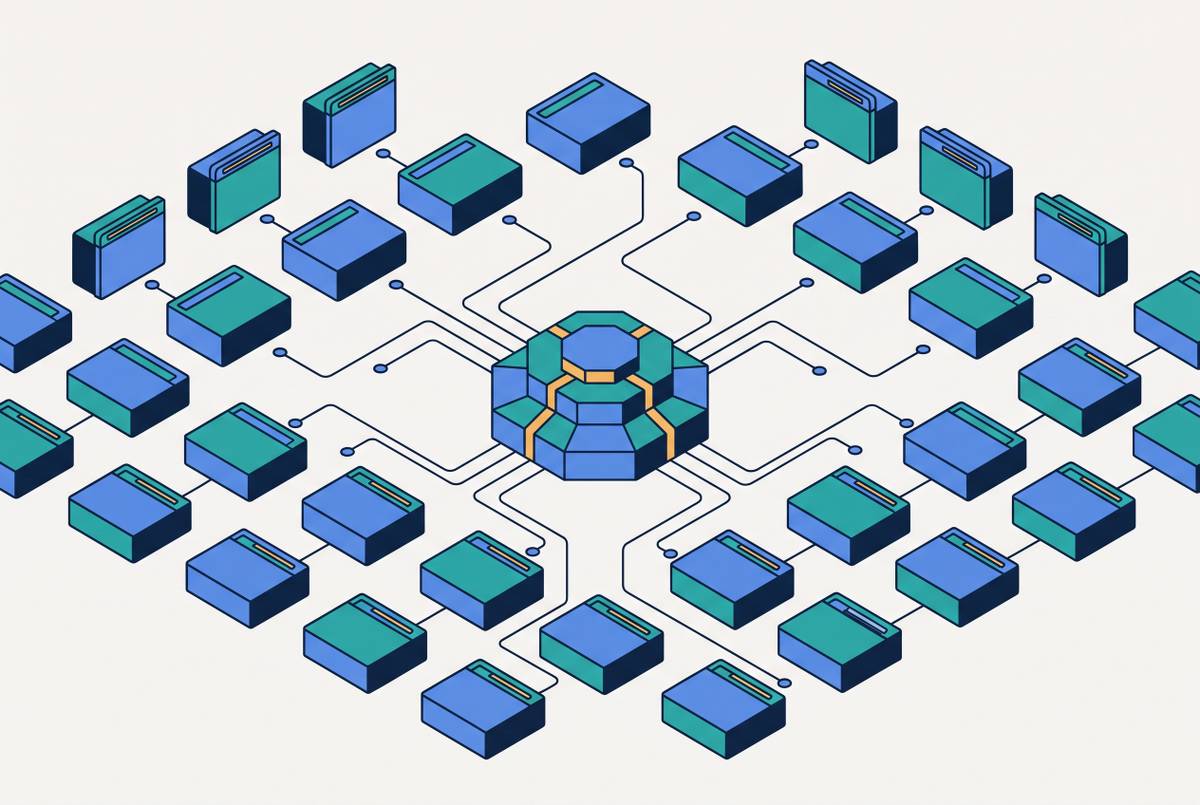
The comparison to older resource-pooling patterns is instructive precisely because it is not just an analogy, it is close to identical mechanics. Thread pools pre-allocate a fixed number of workers so a program avoids the cost of spawning and tearing down a thread for every task, and they enforce a concurrency ceiling so the system doesn't oversubscribe the CPU. Database connection pools do the same thing for network sockets: reuse an already-established, already-authenticated connection, run periodic health checks against it, and return it to the pool once the query finishes rather than closing it. Browser session pools apply that exact logic to browser processes.
The analogy breaks, though, in a way that reveals something important. A database connection carries essentially one piece of state: an authenticated socket. A session, in this sense, is not one resource but a bundle of coupled ones, each of which can go stale, get corrupted, or leak independently of the others. That is why lifecycle management for browser pools is a harder problem than lifecycle management for thread or connection pools, not an easier variant of the same idea.
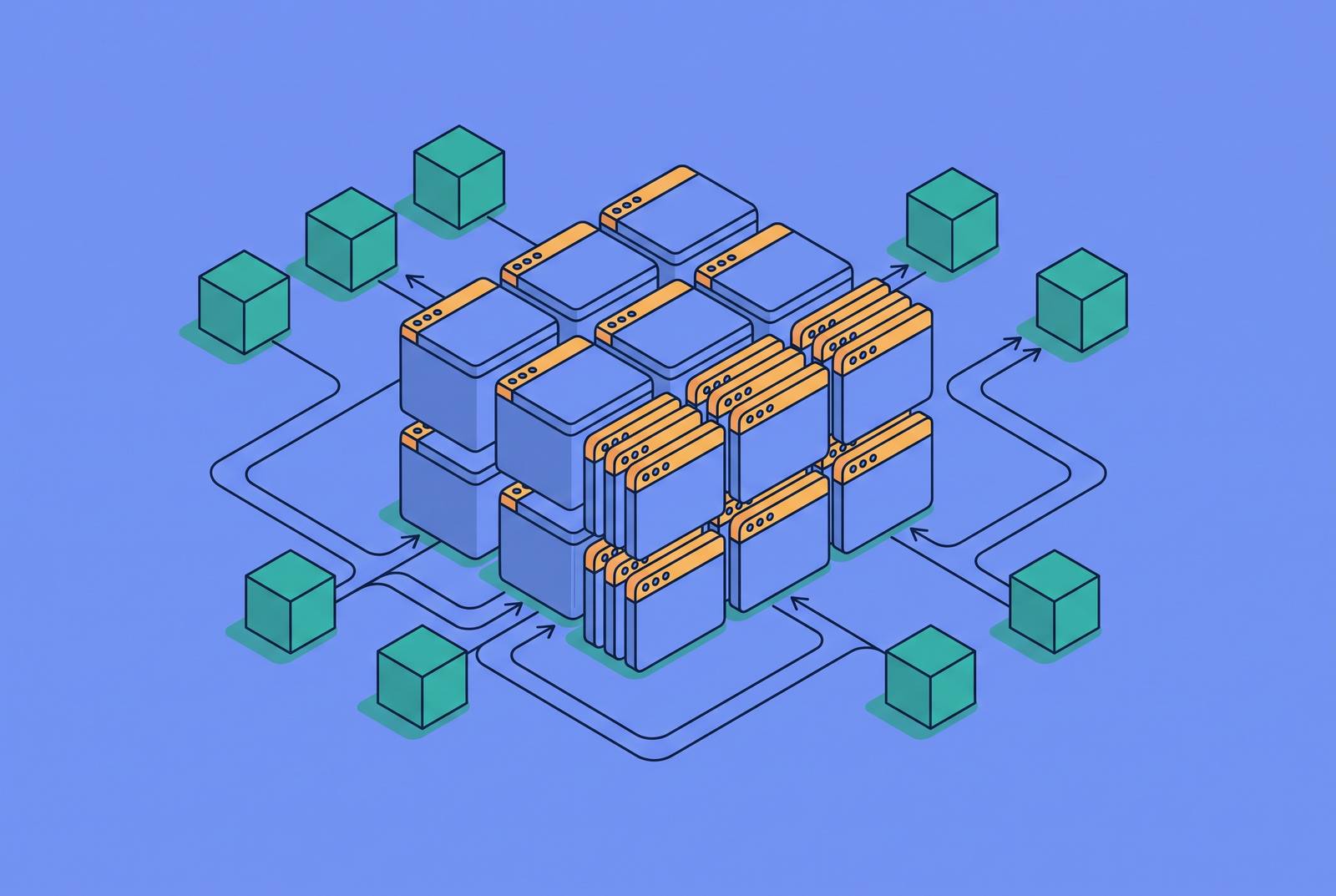
The vocabulary that makes this tractable: pool size (how many sessions run concurrently), queue depth (how many tasks wait when the pool is full), session TTL (time to live before forced eviction), eviction policy (the rule for deciding a session is no longer safe to reuse), and health checks (the mechanism for catching a broken session before it's handed to the next task). Every section that follows leans on five lifecycle phases that every pooled session passes through. What follows is architecture. Key difference: browser sessions carry more state (cookies, local storage, authenticated identity, page context) than a DB connection, and this makes lifecycle management harder, not easier. What a "session" consists of in this context is a running browser process, its network identity, any authenticated cookies, the page context, and any CDP connection open to it.
Session lifecycle: what happens between "borrow" and "return"
A pooled browser session moves through five distinct lifecycle phases. Initialization spawns the process, launches the browser binary, assigns a network identity, and optionally pre-authenticates. Warm-up follows: the session clears whatever bot-detection handshake the target site requires, seeds cookies, and, if the destination domain is known ahead of time, loads the base page before an agent ever touches it. Active lease is the phase most people picture when they think about "an agent using a browser": the agent holds the session, executes its actions, and may hop across multiple pages or subdomains in the process.
Return and sanitization is where the discipline actually lives or dies. A session coming back from an active lease needs its ephemeral state cleared, form data, transient cookies, scroll position, and then it needs a health check before it goes back into the pool. Skipping that step is the single most common mistake in amateur implementations: closing the browser outright at the end of a task, throwing away the warm cookies and bot-detection clearance that made the session valuable in the first place, and paying the full cold-start cost on the very next request. Eviction is the fifth phase, and it's a deliberate one: sessions that exceed their TTL, fail a health check, or have accumulated enough browsing history to raise fingerprinting risk get destroyed rather than recycled.
State contamination deserves its own callout. Workflows that modify shared state, anything that logs into an account or alters a database behind the scenes, should run on separate authenticated profiles instead of sharing one identity across concurrent runs, since a shared profile is one bad interaction away from corrupting every task that touches it afterward. Left unmanaged, browser processes that aren't explicitly cleaned up simply accumulate. CPU and memory limits paired with automatic cleanup routines are non-negotiable in production, since without them browser processes accumulate silently.
Session affinity is when a specific multi-step authenticated workflow has to stay pinned to one instance rather than floating across the pool. It's sometimes necessary, but it should be the exception built with an escape hatch (live migration during maintenance windows) rather than the default architecture. Treating affinity as the norm reintroduces the exact rigidity that pooling exists to eliminate.
Warm instance management: the economics of keeping browsers alive
What does "warm" actually buy an agent? A warm session has already cleared bot-detection handshakes, already holds valid auth cookies, already has CDN assets cached, and already has TCP and TLS connections established to the target domain. Each of those shaves real latency off the next task and lowers the odds that the task fails. Cold-starting a full Chromium instance is not a trivial cost, and that cost compounds fast once concurrency climbs into the hundreds or thousands of sessions.
So why doesn't everyone just keep every session warm indefinitely? Cost. Keeping a session alive consumes compute whether an agent is actively using it or not, and at low request volume, cold-spawning on demand is cheaper in aggregate than paying for idle warm capacity. At high volume, the math flips: spawn contention, dozens of processes all trying to launch Chromium at once, starts dominating latency, and warm pools become cheaper because they front-load the expensive setup before demand arrives. Where exactly that crossover is depends on task arrival rate and per-session startup cost, but high-frequency agent workloads land on the warm-pool side of that line almost without exception.
Billing structure quietly decides which side of that trade a team ends up on. A platform that bills for every wall-clock second a browser instance exists punishes exactly the behavior that makes pooling worthwhile, because idle warm time becomes idle billed time. Per-task or per-active-minute pricing aligns incentives correctly instead, rewarding a warm pool for existing without penalizing it for waiting. The pricing model can silently undo the architecture a team is trying to build, which should be checked before committing to any managed platform.
Managed authentication changes the calculus too. Kernel's approach lets agents log into third-party sites without ever handling raw credentials directly. A warm, authenticated session can sit in the pool without exposing a password to every process that touches it, a detail that matters considerably once enterprise identity requirements enter the picture. And warmth is not free of decay: a session that's been alive and browsing for hours accumulates a history that can itself become a fingerprinting signal, making it more identifiable to anti-bot systems over time. TTL-based eviction is the correct response to that decay, not an indefinite reuse policy that assumes a warm session stays invisible forever. The keepAlive pattern: Browser Run's experimental session pool access exposes this directly via Wrangler CLI (wrangler browser create --lab --keepAlive 300), holding sessions alive for up to the specified duration (60–600 seconds) rather than cold-spawning per request.
Concurrency limits, queue management, and the failure modes that emerge at scale
Concurrency and parallelism get used interchangeably in casual conversation, but the distinction is exactly what a pool operator has to manage. A pool has a hard ceiling on live sessions; tasks that arrive beyond that ceiling queue, they don't automatically fail, and queue depth combined with a sane timeout policy matters just as much as the size of the pool itself. What happens once that ceiling is hit branches into three outcomes 10 Best Agentic Browsers for AI Automation in 2026. Tasks can queue and wait, which is fine as long as the queue has a bounded depth and a timeout attached to it. Tasks can get rejected outright, which is fine if the calling system is built to handle that kind of backpressure gracefully. Or the system spawns new sessions past the soft limit, which is dangerous without a hard cap, though it can work as a deliberate burst strategy when that cap exists.
Concrete signals from the platform layer back up how real this bottleneck has been. Concurrency limits jumping fourfold on one platform during a recent product cycle is a fair indicator that the previous ceiling was actively constraining production workloads rather than sitting comfortably above demand. On the other end of the spectrum, running browser grids locally instead of through a managed cloud pool introduces its own failure modes: version drift across instances that were spun up at different times, flaky networking once session counts climb, and the sheer operational overhead of keeping a self-managed grid patched and healthy.
Proactive scaling beats reactive scaling in nearly every case worth considering. Pre-warming sessions ahead of expected load sidesteps the cold-start latency that pooling exists to eliminate in the first place; scaling reactively, only spinning up new capacity once demand has already arrived, reintroduces that exact penalty at the worst possible moment. Queue design carries its own subtlety too. First-in-first-out is the default, but it isn't always the right one: priority queuing earns its keep once some agent tasks are latency-sensitive (a user waiting on a live result) and others are batch work that can tolerate a delay. And the timeout on a queued wait should always be shorter than the timeout on task execution itself, since "could not get a session" and "got a session but the task ran too long" are different failures that call for different retry logic. Bright Data Agent Browser supports 1M+ concurrent sessions without performance degradation, a useful ceiling reference for what managed infrastructure can reach (brightdata.com, 10 Best Agentic Browsers for AI Automation in 2026).
Failure isolation: why one bad session must not corrupt the pool
Returning a broken session doesn't just fail one task, it hands that same failure to whichever task gets the session next, and now a single bad interaction has become a recurring one. This is the point where pooling discipline and reliability engineering become the same conversation.
Isolation works across a few boundaries simultaneously. Process isolation means each session runs in its own browser process, so a render crash takes down that one session and nothing else. Network identity isolation means sessions shouldn't share an IP identity, because a block triggered by one session targeting a given domain shouldn't spill over and block every other session aimed at that same domain. Auth isolation follows the same logic: workflows touching shared state should run on separate accounts rather than a single shared profile, since a shared auth profile is a single point of failure sitting in the middle of an otherwise well-isolated system.
Passive checks ask whether the last task returned an error. Active checks periodically ping a session directly to confirm it's actually responsive, independent of what the last task reported, because a session can be technically alive and completely stuck at the same time, and passive monitoring alone will miss that condition every time.
Some failures are best resolved by a person rather than a retry loop. Handing control to a human operator when an agent hits an unexpected roadblock, an unfamiliar login page, an edge-case CAPTCHA, and letting automation resume once that person clears the obstacle, turns a hard failure into a recoverable one. That's failure isolation functioning as an operational safeguard rather than just a debugging tool bolted on after the fact. None of it works, though, without visibility into what a session is actually doing in the moment; observability into live agent behavior is the precondition that makes isolation possible at all, not a nice-to-have layered on top of it. A circuit-breaker pattern rounds this out at the domain level: if a target site is producing repeated failures across multiple sessions, route new tasks away from that domain until health is reconfirmed, the same resilience-engineering principle that's kept distributed backend systems standing for years, applied here to browsers instead of databases. The core principle is that a session that encounters a CAPTCHA wall, a login challenge, a JS crash, or a network partition must be evicted from the pool, not returned. Returning a broken session propagates the failure to the next task.
Agent-native browser infrastructure at the platform level
The distinction that opened this piece, automation versus infrastructure, is also the cleanest way to sort the platforms actually building for this problem. A platform that solves both layers together is doing something categorically different from a framework that only ever addressed one of them.
Browserbase built its cloud platform specifically around production browser automation because developers keep writing against familiar tools, Playwright, Puppeteer, Selenium, while Browserbase handles the Chromium instances, containers, scaling, and lifecycle management underneath. As of late 2026, it's described as the most widely deployed cloud browser platform for AI agents by developer ecosystem adoption, and it directly answers the lifecycle and scaling questions raised earlier in this piece.
Kernel offers managed authentication so agents can log into third-party sites without raw credentials changing hands. Warm authenticated sessions can be held safely in the pool.
Scrapfly claims sub-second startup, auto-scaling infrastructure, and 99.9% uptime, and its Cloud Browser and AI Browser Agent reportedly clear major anti-bot systems within the same session; anti-bot failures are often the actual trigger behind session eviction 7 Best AI Browser Agents for Automation and Scraping in 2026. It ships in Python, TypeScript, Go, and Rust with usage-based pricing, which broadens its reach across engineering teams that aren't standardized on a single language.
None of these tools solve identical problems, and that's arguably the healthiest sign for the category: a market mature enough to specialize is a market that's stopped treating "spin up a browser" as the whole architecture, and started treating the pool itself, the lifecycle, the warmth, the isolation, as the thing actually worth building well. It spins up sandboxed cloud browsers in under 30ms, a concrete warm-instance startup figure that directly addresses cold-start latency discussed earlier. Bright Data Agent Browser. Purpose-built for scale, it supports 1M+ concurrent sessions without performance degradation, as brightdata.com (10 Best Agentic Browsers for AI Automation in 2026) reports. Browser Run (edge-native option, formerly Browser Rendering). It is available on Workers Free and Workers Paid plans, with Live View, Human in the Loop, Session Recordings, and higher concurrency limits all immediately available. It exposes a Playwright-compatible remote CDP interface plus quick-action APIs: a /crawl endpoint returning HTML, Markdown, or structured JSON, and a screenshot API for vision-based agent tasks. Approximate pricing as of late September 2026 is roughly $0.09 per browser-hour (verify directly before publishing (Cloud Browser Infrastructure for AI Agents: 2026 Guide)). Experimental session pool access is available via Wrangler CLI: wrangler browser create --lab --keepAlive 300. It offers WebMCP-enabled browser support for MCP-integrated agent workflows. It uses 7x less memory than…](https://thenextweb.com/news/cloudflare-kitesurf-browser-ai-agents-workers)). Vercel Agent Browser (vercel-labs/agent-browser). It is an open-source headless browser automation CLI with a fast Rust core and a Node fallback, with approximately 39,800 GitHub stars, as scrapfly.io (7 Best AI Browser Agents for Automation and Scraping in 2026) reports.
Sources
- 11 Best AI Browser Agents in 2026
- 7 Best AI Browser Agents for Automation and Scraping in 2026
- 10 Best Agentic Browsers for AI Automation in 2026
- Building Browser-Using AI Agents in Python - MachineLearningMastery.com
- Browser Run: give your agents a browser | Cloudflare Blog
- Cloud Browser Infrastructure for AI Agents: 2026 Guide